Newsletter & Journal 2.8
VOLUME II NUMBER 8

Co-Presidents: Bea Hamm & Sarah Hepburn
Treasurer: Mo Clark
Secretary: Emily Wu
Board of Directors: Monique Fisher, Elise Gouge, Marie Hinds
Website: Rebeca Kerr & Monique Fisher
Editors: Bea Hamm & Rebeca Kerr
Please send your content and pictures to us at: nebcrnewsletter@gmail.com

Featured: Riley
Riley is such a good boy patiently waiting for his forever home.
Could it be you? For more info, click here.
2025 Year in Review
NEBCR is pleased to debut our 2025 Year in Review video. About this time each year, we celebrate the success stories of our previous year, one dog, one family at a time. A special thank you to Marc Loiselle for creating this heart-warming video to remember those who have a second chance.
Introducing NEBCR Member Donalee Slater
Happy New Year all!

My name is Donalee and I live on the shoreline in Connecticut just minutes from the largest beach in the state. I have worked at Yale University for 38 years in various departments. Currently, I am the assistant director in the Department of Science Education, providing undergraduate students with a strong science and quantitative reasoning foundation through program support and research fellowships. I thoroughly enjoy my position even though I don’t have a science background.
Growing up, we always had an assortment of pets. A cat and dog were always a fixture in the house, joined by miniature turtles, hamsters, and rabbits.
When I was 12 years old, my mother was given a black and white pup (mom was a BC, dad was unknown) by our vet after the loss of our family dog. Even though I have two brothers, they are very much older than I am, so this was “my dog,” and this was the start of a lifelong admiration for the intelligence and love for the Border Collie breed. I spent many hours teaching Bandit tricks, playing frisbee, and going for walks in the woods. I swear he would look at me so intensely, trying to understand what I was saying, and most of the time he did. Thinking back, he must have been an extremely smart dog to understand the training methods of a young kid who knew nothing.

Years later, when I bought my first home, I knew I was ready for a Border Collie. That was 30+ years ago, and I have been fortunate enough to share my life with eight special BCs. I played flyball for a few years and trained and competed in agility and herding for the last few decades. My current “pack” is Maze (16), Rev (7), and Rae (2).
I came across New England Border Collie Rescue in early 2002 while looking to add another BC. I visited the website so often that I decided to apply to volunteer for the organization. I started out doing home visits and then acting as the “events coordinator,” searching for events and responding to invitations from fairs, sheep & wool festivals, etc., to staff a table, informing the public about NEBCR. I have occasionally fostered and think it is one of the most rewarding experiences. Today I do evaluations, transports, assist on Intake, and help with the calendar.

I ended up adopting from NEBCR in 2005. Folly came into rescue at 11 months old, having gone through two homes through no fault of hers. She was the perfect addition: outgoing, energetic, and fitting right in. At the time, I had a senior and a 10-month-old pup that was fear-aggressive (dogs and people). Family and friends thought I was a bit crazy for bringing in a rescue while still learning to help and manage Finn, but they became fast friends, and I credit Folly with aiding my progress with Finn as they matured. I became involved in flyball because Folly loved tennis balls and running.

I decided to train Finn, not thinking he would ever play. A few months after Folly started racing, Finn made his debut in the lanes. Finn seemed to forget his fears when he played flyball, agility, and even herding.
If you are unfamiliar with flyball, it is a fast-paced dog sport that is a relay race for teams of four dogs – two teams run head-to-head with dogs passing nose to nose down the lane.
I am thankful for rescues like NEBCR that give dogs a second chance, and I am proud to be a small part of the process.
So, You Think You Want a Border Collie?
by Kerry Maloney
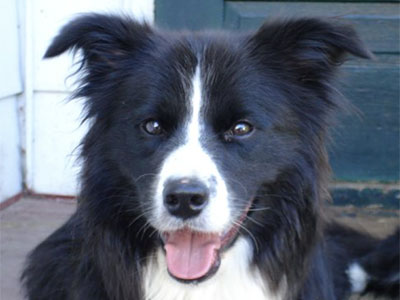
The problem with border collies (if you could consider it one) is that they ruin you for other dogs. I’m sure everyone feels that way about their preferred breed, but for those of us lucky enough to be loved by an energetic ball of “what are we doing next?”, it is especially true.
This was brought home to me again over these past holiday weeks. As I was at my older brother’s house for Christmas, I was struck by how….boring…their dogs were. My brother has a hound a few years older than my border collie, Belle, who was perfectly happy to just snooze on the couch as the chaos of Christmas happened around him. Okay, this isn’t that unusual for a hound. The other dog was a mixed breed my niece owns who is just two weeks older than Belle. Sweet dog who supposedly is a mix of Husky, Golden, Aussie, and I swear a small brown bear is in the mix in there as well because he looks like an 80lb brown bear. These breeds are more energetic than the average hound, yet this dog was also content to sleep through the entire day. It wasn’t the type of napping typical of a border collie – the sleeping with one eye open in case someone gets up to go somewhere. This was full cat-level snoozing. After over twenty years of living with border collies, it is bizarre to me to be able to walk around the house without a dog following you.
Conversely, I host multi-day gatherings at my house over Thanksgiving weekend and New Years. I have anywhere from 15-30 people at my house all day, multiple days in a row. This is Belle’s absolute favorite time of year. She feels it is her duty to adequately exercise all of the humans by bringing them toys to throw. She performs this duty nonstop for days in a row and is clearly thrilled to do so. Inevitably there are one or two guests that haven’t met her before and are blown away by the number of toys she knows the individual names of (95+ at last count) and they get endless amusement from asking her to go find a particular toy amid all the party chaos. Those not familiar with border collies are always amazed at how she can go nonstop. They love playing with her until they tire out and then they turn her over to a nearby child and tell them to go outside and play frisbee with her for a while. Usually, I get some version of the comment “she’s great but I couldn’t live with a dog that energetic. I don’t know how you get anything done!” This is the misconception non-border collie people often have. Even my other brother, who absolutely adores Belle and watches her whenever I travel, has said he couldn’t live full-time with a border collie. I have to explain that it is pretty easy to live with a border collie – you just have to train them. As I sit here typing, Belle is snoozing on the couch. She has an off-button otherwise I would never be able to get anything done on the days I work from home. I have tried to explain to my brother that he can just tell her to “settle” or “go lie down” when he wants a break from playing. He said he has tried to do that but then she gives him sad eyes and he caves again. Well, there you go….a smart dog knows how to train a human as well and she has figured out who are the soft marks!
LIVING WITH A BANDIT
By Melissa Kelly

I adopted Bandit in the fall of ’23 just shy of his first birthday. The day we met, and as much as I tried to prepare for him, there was no way to prepare for that crazy bundle of joy that popped out of that car and into my life.
Since then, we have learned a lot from each other. I had to learn his language, work on my patience (the more rushed he is, the longer he takes), and get earplugs for car rides (when he thinks we are “there,” he sings the songs of his people in excitement, which is usually about 10 minutes out from our actual destination).

But every minute of frustration as we learn more about each other has been absolutely worth it.
Bandit has taught me to enjoy the simple things: the joy of pouncing on fluffy snowflakes as they fall, the joy of crazy zoomies that have to happen after we reach a summit, no matter how long the hike, and the snuggles on the couch after a long day.
He is everyone’s favorite coworker and has even convinced a few to keep snack drawers for him. Through him, I have made new friends (who happen to be his dog friends’ parents), I joined the world of dog Agility (which he is way better at than I am), and somehow he convinced this girl with two left feet to do a dancing with the dog routine in front of the Lake Champlain Kennel Club. Overall, I can’t imagine my life without him; every day is a new adventure, and with Bandit, it’s never a dull one!

ASK THE VET: Winter Paw Problems in Dogs
by Dr. Sarah Hepburn

As winter settles in, many of us focus on keeping our dogs warm and active, but their feet often take the biggest hit this time of year. Cold temperatures, ice, snow, and de-icing chemicals can all contribute to paw discomfort and injury. Being aware of common winter foot problems can help you prevent issues and know when it’s time to seek veterinary care.
One of the most frequent winter paw problems is dry, cracked paw pads. Cold air and low humidity dry out the skin, while rough ice and frozen ground can cause small fissures that are painful and prone to infection. Dogs may lick their feet excessively or appear reluctant to walk. Chemical irritation from ice melt products is another common concern. Many de-icers are harsh on the skin or toxic if ingested, leading to redness, sores, and stomach upset when dogs lick their feet after walks.
Ice buildup between the toes is especially common in dogs with longer hair on their feet. These hard clumps can pull at the skin, cause bruising, and force the toes into uncomfortable positions. Over time, this may lead to limping or soft tissue strain. Winter conditions can also increase the risk of nail and nail bed injuries. Nails tend to be more brittle in cold, dry weather, and slipping on ice can result in broken or torn nails that are painful and slow to heal.
Prevention is key. After winter walks, rinse or wipe your dog’s feet to remove salt and chemicals, then dry them thoroughly, paying close attention to the spaces between the toes. Keeping the hair between the paw pads neatly trimmed helps reduce ice buildup. Applying a pet-safe paw balm can help protect pads from drying and cracking. For dogs that are particularly sensitive, well-fitting dog boots can provide excellent protection from cold surfaces and chemical exposure. Using pet-safe ice melt products around your home is another simple but effective step.
Even with good preventive care, problems can still develop. Contact your veterinarian if your dog is persistently limping, has swelling, bleeding, open sores, or signs of infection such as redness, discharge, or an unpleasant odor. Sudden refusal to walk, obvious pain, or a suspected torn nail should also be evaluated promptly. With a little extra attention during the winter months, you can help keep your dog’s paws healthy, comfortable, and ready for cold-weather activities.
TRAINER’S CORNER: The Power of Play
by Elise Gouge, CPDT, CABC Certified Behavior Consultant & Trainer

In my job outside of NEBCR, I see clients who own dogs with issues ranging from wild exuberance to serious anxiety or aggression. The owners, like all of us at NEBCR, are devoted and committed to trying to help. At the same time, our resources, bandwidth and time are limited. While living life, working regular jobs, raising families and more, how is it possible to get the most out of our foster and resident dogs, how do we maximize the relationship, minimize the issues and help the dog be their best possible self?
Some of the most useful advice I am able to offer people is also some of the easiest. You don’t have to dedicate hours to training every day, you don’t have to go to classes every night and you don’t have to get a PhD in animal behavior. Implementing a few easy daily practices can really transform relationships with foster and resident dogs and that’s a win for everyone! Here are two of the key components I recommend all dog owners incorporate into daily life.
Reward Your Dog with What They Want
Sounds obvious, right? Well, you’d be surprised with how many owners go on auto-pilot and reward with treats or praise. Treats and praise are great, don’t get me wrong, but if you harness the things your dog is motivated for right in the moment, you have two advantages. The first is that you don’t have to be in a formal training set-up and the second is that the dog is highly motivated not just to do the behavior but also to really like it when you ask them to do things. If doing commands gets them what they want in the moment, they will absolutely work harder for you.
Here’s an example. You want the dog to sit when asked. You grab some treats in the kitchen and do a few reps of sit –> treat. Cool. The dog is learning, life is good. But, what if you did that same practice later that night when you saw the dog wanted to jump on the couch to relax? You ask him to sit, he sits, he’s allowed access to the couch. Wow. You just taught that dog that listening to you gives him access to what he wants right then and there. What if he doesn’t sit? Simple, no access to the couch. Maybe a few minutes later you notice him eyeing the couch and you give him another shot. At some point he’ll make the connection that listening to you equals access to whatever is motivating him in the moment and that, my friend, goes a long way!
If you notice what motivates your dog and you start asking for commands before giving him access to those things, you have a way to weave training into everyday routines that’s pretty effortless. It requires you to notice what your dog wants and it requires you to be able to control access to it (so that if he does the command he gets it and if he doesn’t do the command, he doesn’t get it). Technically, this is called the Premack Principle and you can google it for lots and lots of examples. I use Premack for almost everything with my dogs. It’s a way of life. He wants his leash clipped on for a walk? Great, he needs to sit (or be calm). He wants to greet the person? Perfect, show me four feet on the floor first. Directly rewarding my dogs with the thing that they are most excited for in the moment helps keep them connected to me, motivated to listen and capable of controlling themselves even when they have very big feelings!
Find a Way to Play
Playing with your resident or foster dog is another treasure that we often miss out on when training or looking for good behavior. Some dogs don’t know how to play and many humans are awkward about playing with dogs. For years, the only thing I could think of with dog play was my uncle rolling around on the floor with my dog in a fake headlock, both of them barking and acting like lunatics. No thanks! True play is an art form and takes some time to learn. It can be gentle and subtle or silly and exuberant. A good way to learn about play is to mirror your dog when they seem playful and watch how it changes their behavior. Does it create more energy or less? Does it put more space between you or less? Learning how to play is well worth it since it requires no props, it can be done anywhere and it can be done anytime.
A great example of a play-based training behavior is coming when called. When you are in a safe space (fenced or indoors), call your dog and run away excitedly. Squeak, squawk, be silly. Many dogs love to chase and will bound after you with the zeal and effort you want when you call them. Practicing recalls this way makes it so fun for your dog, nourishes the relationship and solidifies the behavior so when you call your dog in a dog park or when they accidentally get out of the yard, they willingly come back to you.
Some dogs love to tug, some love to chase/be chased, every dog has their own style. Finding what’s fun for your dog is an amazing tool to getting lots of great training done that’s fun and easy. Some of our foster dogs have never had the chance to play and it might feel scary. Starting small, with delicate gestures and soft effort can go a long way. Often, with a new foster I play a game where I pretend to look for something with intense curiosity and wonder (like a Dr. Suess story). My curiosity often peaks their curiosity and soon we are both exploring a space looking for the imaginary thing. If I can, I let the foster dog find it and squeal with delight at their amazing accomplishment. Maybe “it” was a dustball or a crinkled up paper, usually it doesn’t matter. What matters is that we did the game together and by using play, I built the relationship, improved the bond and increased the odds of that dog wanting to listen or trust me in the future.
These days, you can find amazing and wonderful online resources for playing with dogs. There are whole courses that teach play! But, it’s also something you can start today by sitting on the floor and beginning to mirror, watch and learn what your dog likes. What he likes and how he likes to play are two incredible tools you have endless access to. This winter is the perfect time to practice play or Premack. You can do it inside from the comfort of your living room! Enjoying your dog is the most important part of effective training (no one does it if it isn’t somewhat rewarding or fun) so for humans and dogs alike, playing around with the two concepts of play and Premack for the purpose of training will wow you in terms of the huge and awesome ripple effect they have!

Shop online and help NEBCR!
Donate By Shopping sites donate a small percentage of everything you spend to a charity of your choice. When shopping online, please consider using these services to ensure a portion of the money goes to a good cause.